T
H
E
B
L
O
G

Top 10 Ways to Save a Life


As we grabbed our morning beverage at the neighborhood coffee shop, we were struck by the front page of the local paper: the image of a sorrowful dachshund behind bars along with the headline GOAL IS GETTING CRITTERS OUT OF SHELTERS-ALIVE. Reading further, we were shocked to find that 4,000 of the nearly 12,000 animals that entered the featured King County shelters last year were considered too hostile or sick for adoption, these animals were put to death. While we understand that not all of these animals will find homes, this percentage seemed outrageous. As we continued to scan the article, we were encouraged to learn that many steps are being taken to reduce this number, including improving living conditions and adding workers and volunteers to understaffed locations. Not to mention that as recently as 1990, the euthanasia rate was at 80% for incoming strays. So it seems that we are making headway.

This got us thinking, while we may not be able to head right out and adopt our very own pack of dogs or progeny of cats, there are still many ways to help with the crisis of overpopulation. Here's our top 10:

1. Adopt {Your certain someone is waiting for you, just be sure you do your research!}
2. Volunteer {Lots of duties to be done, not just the poopy ones!}
3. Foster (There is always a shelter or purebred rescue near you in need}
4. Spay & Neuter {The cat pin above says it all...}
5. License- yes cat's too! {hefty discounts if your pet is already altered, hefty fines if they're not licensed}
6. Microchip {It's the easiest way for your lost pet to be found}
7. Attend fund-raising events like fun runs and auctions {check out the CityDog Magazine event calendar}
8. Donate items {Most shelters have wish lists on their websites with needed items such as new towels and pet food.}
9. Purchase from retailers who donate to animal causes such as Delia's House of Canine Couture on Etsy.com {click the cat pin above to purchase}
10. Give cold hard cash, it's always warmly excepted. {Check with your employer, many corporations will match your donations.}


And of course stay tuned to dane + dane studios, we plan to launch our successful "Operation Portrait PAWSitive" program in Seattle this Summer!

Labels: , , , , , , , , , , , , , ,

Putting the CAT in Catalina!

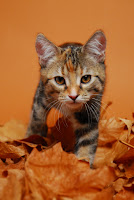
I just had to share Catalina with you: a sweet little lion-heart feline who graced me with her presence today.

I typically don't shoot on Sundays
I typically photograph cats in their home instead of the studio
I typically don't use many props

But miss 'Lina was an exception all these rules, and I am so glad! She was a gentle-yet-speedy little ball of spunk, complete with extra toes and sporadic streaks of orange that match her eyes...

What a great way to spend an afternoon! Thought you might enjoy seeing her for yourself...


Labels: , , , , ,

The Ambivalent Bond With a Ball of Fur

By NATALIE ANGIER
Published: THE NEW YORK TIMES
October 2, 2007

"A couple of weeks ago, while I was out of town on business, our cat, Cleo, died of liver failure. My husband and daughter buried her in the backyard, not far from the grave of our other cat, Manny, who had died just a few months earlier of mouth cancer.

Cleo was almost 16 years old, she’d been sick, and her death was no surprise. Still, when I returned to a home without cats, without pets of any sort, I was startled by my grief — not so much its intensity as its specificity.

It was very different from the catastrophic grief I’d felt when I was 19 and my father died, and all sense, color and flooring dropped from my days. This was a sorrow of details, of minor rhythms and assumptions that I hadn’t really been aware of until, suddenly, they were disrupted or unmet. Hey, I’m opening the door to the unfinished attic now. Doesn’t a cat want to try dashing inside to roll around in the loose wads of insulation while I yell at it to get out of there?

I’ve just dumped a pile of clean laundry on the bed and I’m starting to fold it. Why aren’t the cats jumping up for a quick sit? Don’t they know everything is still warm?

We expect the bonds between children and parents, or between lovers or close friends, to be fierce and complex, and that makes them easy to understand. We expect the bonds between people and their pets to be simple and innocent, an antidote to human judgment and the fog of human speech, and that can make the bond paradoxically harder to track or explain. How do we feel about the nonhuman animals whose company we crave? We think we know. Our pet is our “best friend,” a “member of the family,” a surrogate child for the adults, in loco parentis for the kids and the best possible pillow for whoever has first dibs.

Pets are growing ever more popular. In 1988, according to the American Pet Products Manufacturers Association, 56 percent of American households had a pet. By 2006, that figure had climbed to 63 percent, which works out to a national census of 88 million owned cats, 75 million dogs, 16 million birds, 14 million horses, 142 million fish, assorted small mammals and the occasional leopard or Madagascan hissing cockroach.

We love our pets and we love the idea of pets, of reaching beyond the parochial barriers of the human race to commune with other species. When Alex the African gray parrot, renowned for his ability to communicate, do simple arithmetic and describe objects by their color, size, shape and material, died last month of cardiovascular disease at the age of 31, his obituary appeared everywhere, and Irene Pepperberg, the scientist who had trained Alex since 1977, was flooded with condolences.

“Alex touched so many people,” Dr. Pepperberg, a lecturer and research associate at Harvard University, said in a telephone interview. “He broke all preconceived notions of what it means to be a bird brain.” She admitted to feeling devastated. “There’s a parrot-size hole in my life,” she said.

Yet part of the reason Alex’s death attracted so much sympathy, and why Dr. Pepperberg’s grief seems normal rather than excessive, is that Alex, in the public eye, was neither pet nor ordinary parrot. He was Pinocchio, striving to realize his full potential — his humanity. Importantly, Alex didn’t merely nuzzle his affection for Dr. Pepperberg. He had genuine dying words, the fine four-hanky phrase, “I love you.”

By contrast, when Leona Helmsley, the hotel magnate who died in August, specified in her will that she was leaving $12 million to her pet dog, Trouble, while stiffing two of her grandchildren, there was scant talk of dogs as best friends. There were hoots, clucks and growls, with one reader on The New York Times Web site advising the grandchildren to “go kill that stupid dog.”

Marc Hauser, professor of psychology at Harvard and author of “Wild Minds: What Animals Really Think,” says ambivalence and tension have long been woven into our feelings about animals. “On the one hand, we feel a connection to other animals and we can’t imagine a world where we’re the only species on the planet,” he said. “On the other hand, we’re always trying to show that we’re not animals. We’re like them, yet we don’t want to be like them.”

Dr. Hauser traces this tension to self-defense. We use animals, and we want to feel justified in using animals. We eat their muscles for meat, flay their hides for shoes and accessories, inject them with experimental vaccines, genetically engineer them into grotesque morphologies to study human diseases. This requires a certain mental distance.

So we adore our pets and lavish time and money on them. Annual pet expenditures in this country have doubled in the last decade and are now more than $40 billion a year. And then we scold ourselves for our foolish fiscal priorities.

We adore our pets and can come to identify with them so deeply that we attribute to them some truly daffy notions, like the radio listener who called in a comment to Colin Allen, a philosopher and cognitive scientist at Indiana University’s Center for the Integrative Study of Animal Behavior. “She wanted to tell me about how her cat had very gingerly brought in an injured bird to show her, as though to say, It’s hurt, please take care of it,” Dr. Allen said. “I suggested there might be other interpretations for her cat’s behavior.”

Yes, we love our pets and anthropomorphize them to the point where we think our cat might enjoy wearing the mouse hat Halloween costume now on sale at Petsmart.com. And still we abandon difficult pets, and shelters euthanize some 10 million pets a year.

I understand the ambivalence of the human-animal bond. I loved my cats, and I miss them, but I resent them, too, for showing me what a creature of small habits I am, and for reminding me that even love is not enough. Life, like the laundry, will always cool down."

Labels: , , , ,